Damage to wool carpets or stored clothing? Prepare evidence for assessment and confirm treatment scope before assuming carpet beetles or clothes moths.
Fabric damage alone does not identify the pest
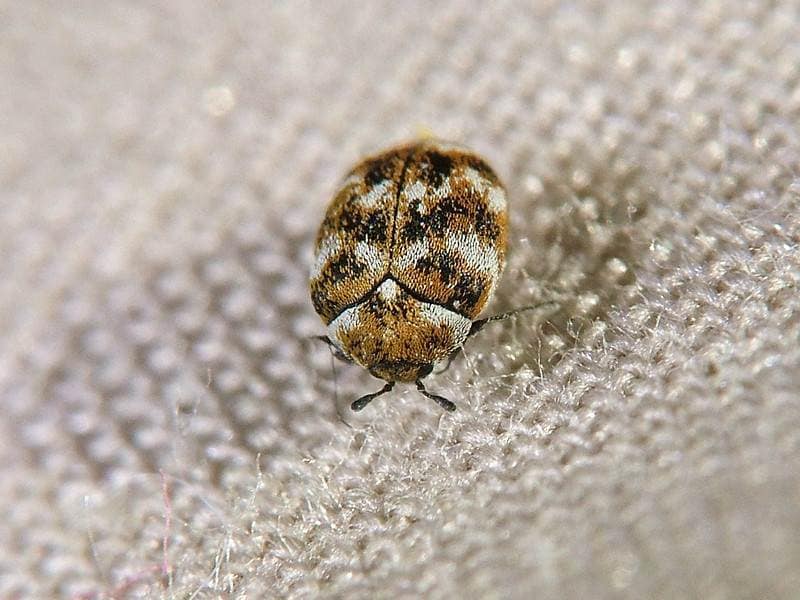
Holes in clothing or damage along a carpet edge can prompt a carpet beetle enquiry, but the damage pattern alone is not a reliable identification. Record where the material was stored and whether you have seen insects, larvae or shed material. Photographs of the affected item and nearby evidence can help frame an assessment.
Our carpet beetle control service in Melbourne can discuss the reported problem. If clothes moths are suspected instead, ask about moth control. The Canadian Conservation Institute describes both dermestid beetles and clothes moths as pests of vulnerable materials, which is why identification matters before selecting treatment.
Keep the material and access questions separate
- Which rooms, cupboards or carpet edges are affected?
- Are natural-fibre garments, rugs or stored textiles involved?
- What evidence can be photographed without spreading items between rooms?
- Which areas need to be accessible for inspection?
- Who should advise on delicate or valuable textile care?
Do not apply household insecticide directly to clothing, antiques or valuable rugs based on a guess. Ask the operator about the pest plan and seek suitable textile-care advice before laundering or treating a delicate item.
Clarify what the proposal covers
Ask whether the service covers inspection, treatment of identified areas, preparation instructions and follow-up. It should not be assumed to include repairing damaged fabrics, cleaning every garment or restoring a rug. Explain previous treatments and whether new damage has been observed since.
Read our carpet beetle treatment guide for background and our pantry and clothes moth guide for the distinction between food and fabric enquiries.
Request a fabric-pest assessment with your suburb, affected materials and photographs if available. Ask for an identification-led proposal rather than a blanket spray based on holes alone.
Further reading
Canadian Conservation Institute: insects and vulnerable materials.