Keep possums out of your roof for good. Where they get in, why sealing too early backfires, what proofing materials last, and when to book a possum control visit in Melbourne.
Need help with this pest problem? Request a free onsite quote from Pest Eraze or call 0416 528 547. Tell us your suburb and the signs you have noticed.
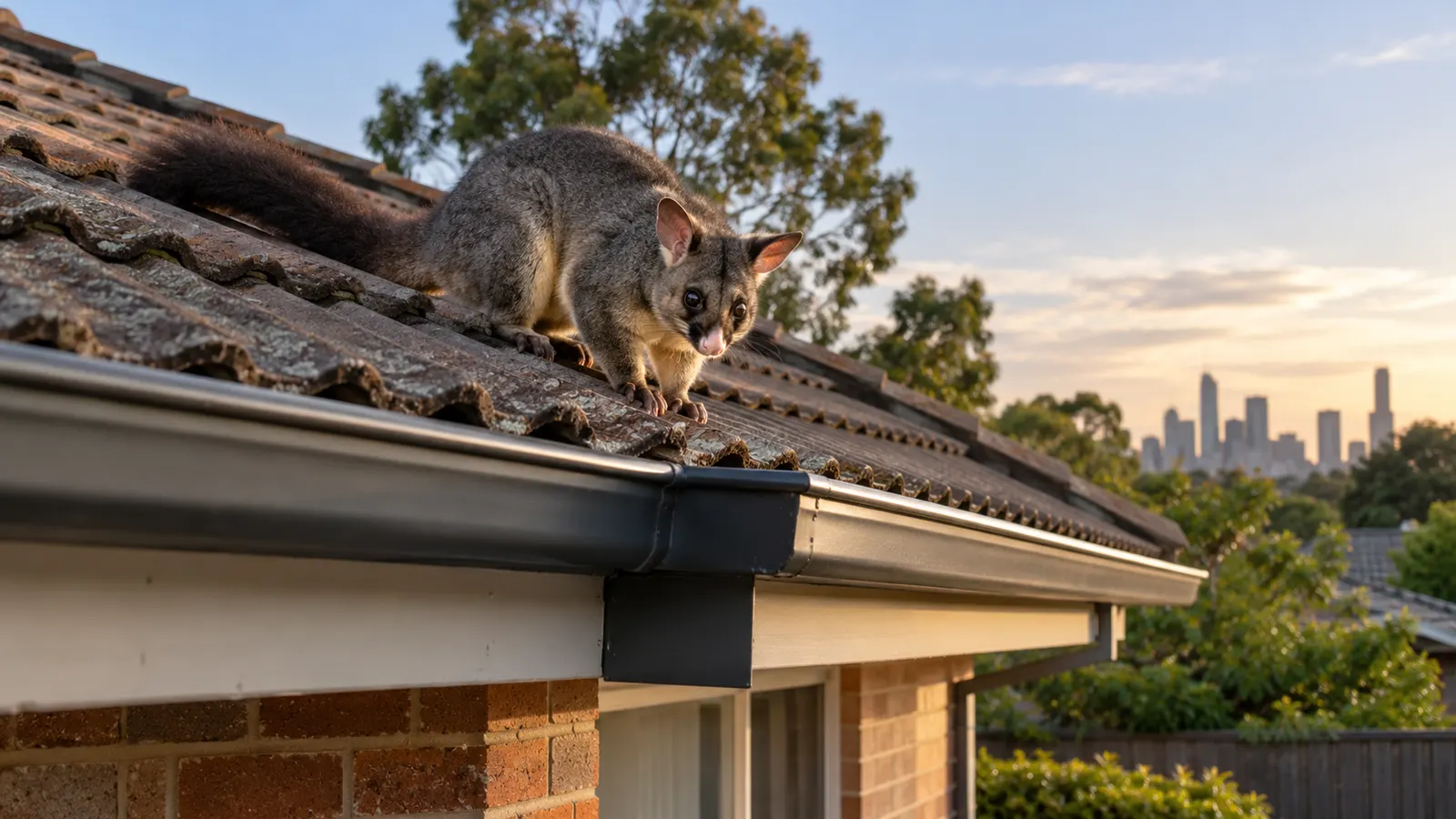
Most possum calls in Melbourne are not first-time visits. A brushtail possum finds a gap, settles in the roof, gets chased out, and is back within a week because the way in was never closed properly. Possum proofing is the part of the job that stops the cycle. This checklist covers where possums get in, the order the work has to happen in, and what makes proofing last.
Why proofing matters more than removal
Common brushtail and ringtail possums are protected in Victoria. They cannot be harmed, and a possum taken from a roof has to be released close to where it was caught, so it will stay in the area. If the entry point is still open, it simply comes back, or another possum takes its place. That is why a proper possum removal and proofing service spends most of its time on the roofline, not the trap. Our guide to Victorian possum removal rules explains the legal side in more detail.
The entry-point checklist
Walk around the house at ground level first, then look closely at the roofline. These are the gaps we find most often on Melbourne homes:
- Gutter-to-roof junctions: the gap where the gutter meets the roof sheeting or tiles, especially on older weatherboard homes.
- Broken or lifted roof tiles: a single cracked tile or a lifted ridge cap is enough for a ringtail possum.
- Eaves and fascia gaps: rotten or shrunk timber where the eave lining meets the wall.
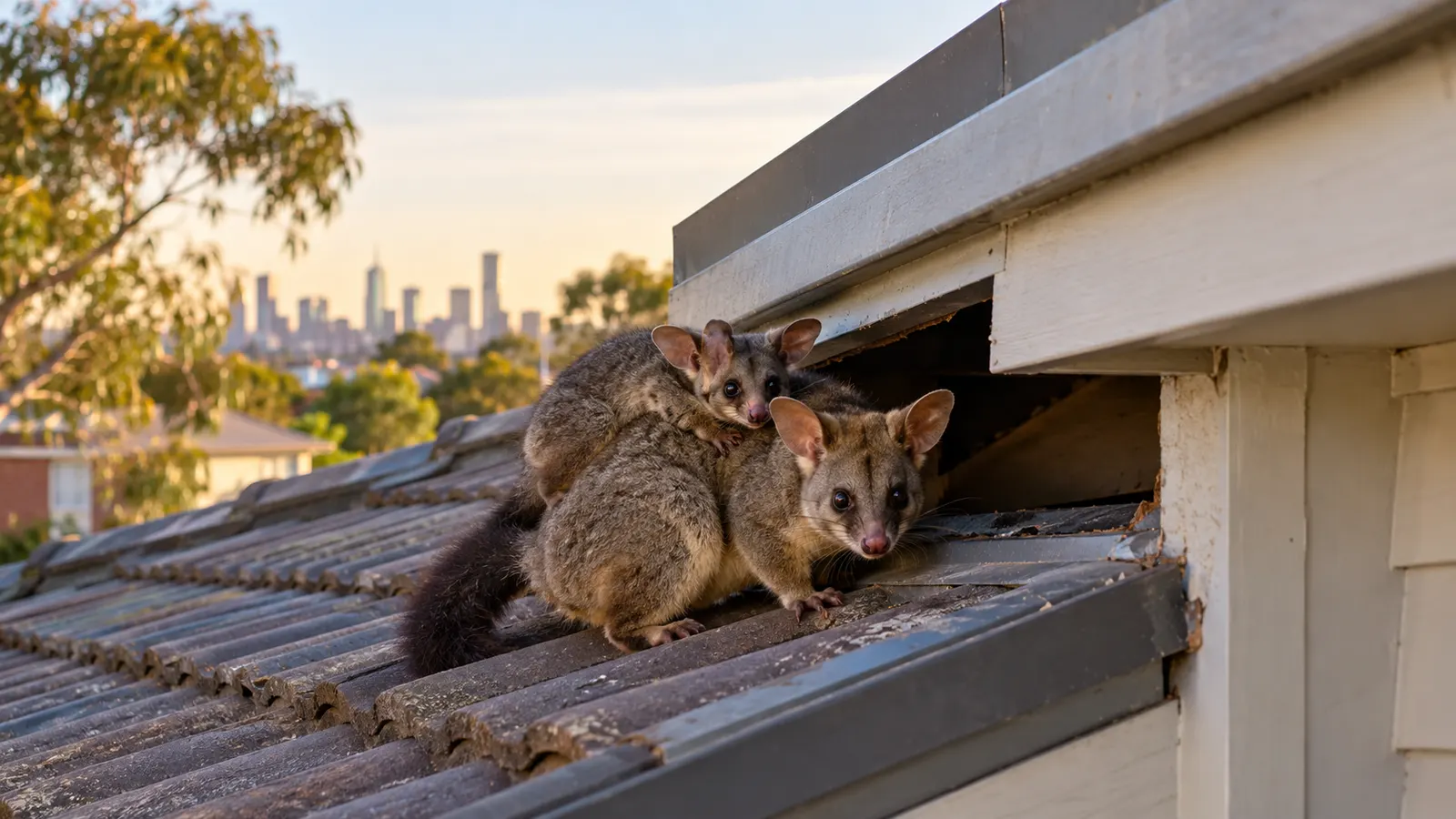
- Roof and wall vents: damaged vent covers and missing mesh on whirlybirds or gable vents.
- Solar panels and roof penetrations: gaps around cable entries, flues and antenna brackets.
- Overhanging branches: any branch within about a metre of the roof is a bridge. Possums rarely need to climb a wall if a tree does the work for them.
- Chimneys: uncapped or unused chimneys on period homes.
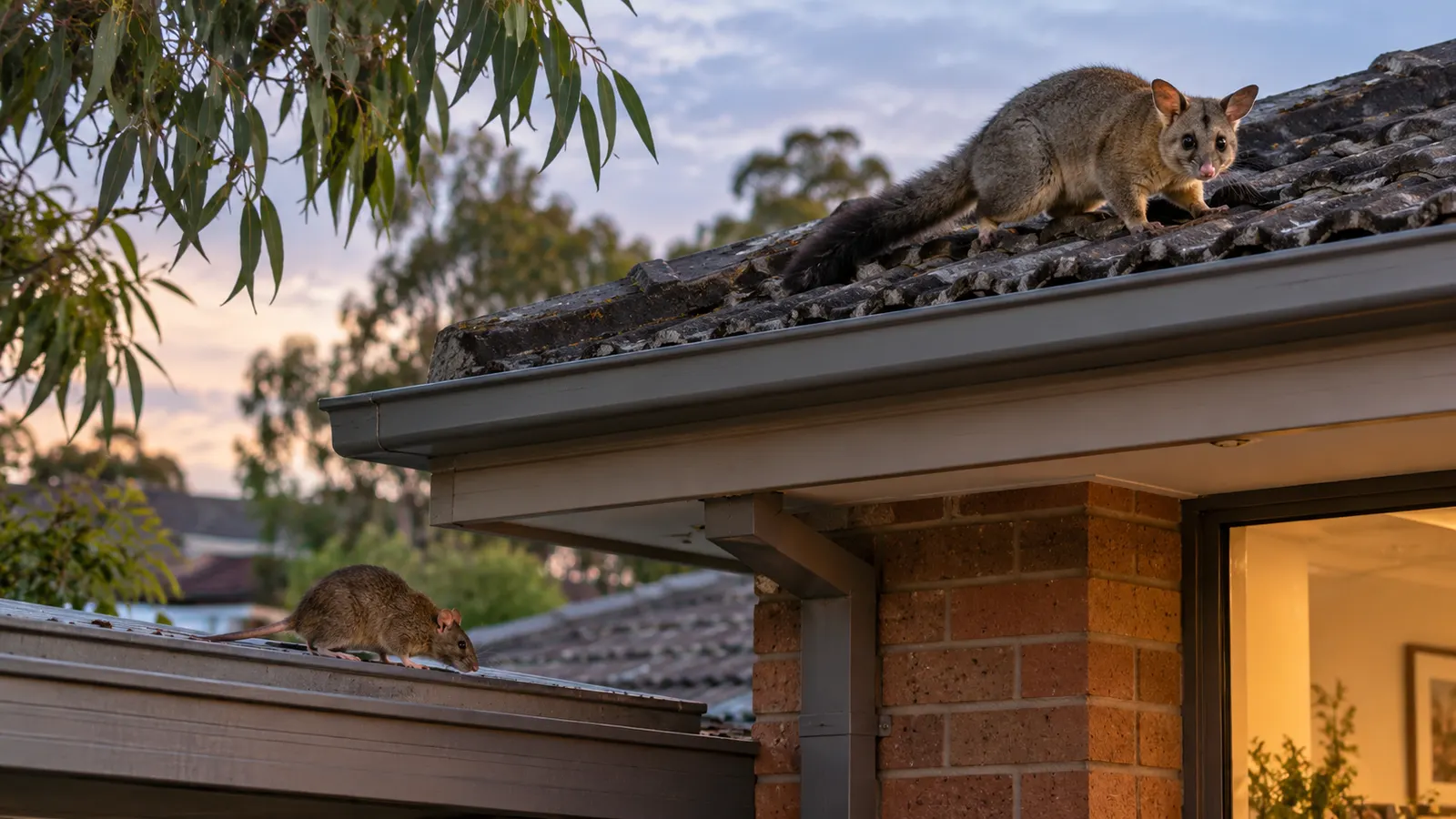
Signs that confirm an active entry point include dark rub marks on the timber, fur caught on edges, droppings on the ground below, and scratching heard at dusk directly above that spot. If you are still not sure the noise is a possum, start with rat or possum in the roof?
The order matters: never seal a possum in
The most common DIY mistake is sealing every gap during the day while the possum is asleep in the roof. A trapped possum will chew, scratch and eventually die in the ceiling, and you will smell it. The safe order is:
- Confirm the main entry point by watching at dusk, when possums leave to feed.
- Seal the secondary gaps first, leaving the main entry open.
- Fit a one-way exit flap over the main entry so the possum can leave but cannot get back in. Leave it for a few nights.
- Check it is gone: no thumping at dawn and no new droppings.
- Seal the main entry permanently once the roof is confirmed empty.
In spring and early summer a female may have young in the roof. Excluding the mother can leave dependent young behind, so read possum exclusion and dependent young before you start, and ask a professional if you hear small, high-pitched calls.
Proofing materials that last
- Galvanised steel mesh or sheet metal for gaps around gutters, vents and eaves. Possums chew through plastic, soft timber and expanding foam within days.
- Secured, not glued: mesh should be screwed or riveted in place, with no loose corners a possum can pull back.
- Replace broken tiles and re-point ridge caps rather than packing them with filler.
- Trim branches back at least a metre from the roof, and check again each year as trees regrow.
Give the possum somewhere else to go
Because the possum stays in your area, fitting a possum box in a nearby tree gives it an alternative shelter. A possum with a dry, safe box nearby is far less likely to keep testing your roofline, which makes the proofing hold.
When to call a professional
- The entry point is on a second-storey roof or steep pitch you cannot reach safely.
- You have sealed gaps before and the possum keeps finding new ones.
- You suspect young in the roof, or the noise continues after you thought it had left.
- There is damage inside: stained ceilings, chewed wiring or a strong urine smell.
A Pest Eraze possum control visit starts with a full roofline inspection, a one-way exclusion at the main entry, and proofing of the gaps we find. If you are comparing what to book, possum removal and roof sealing: what to book explains the difference between removal, proofing and building repairs.
Possum proofing FAQs
How long does possum proofing take?
Most homes need one visit to inspect, seal secondary gaps and fit an exclusion flap, then a short follow-up to seal the main entry once the possum has gone. Larger or older roofs can take longer.
Can I just block the hole with expanding foam?
No. Possums chew through foam quickly, and sealing the hole while the possum is inside can trap it. Use metal mesh or sheeting, and only seal the main entry once the roof is empty.
Will proofing stop other possums too?
Yes. Proofing closes the entry points themselves, so it protects the roof from the next possum that comes along, not just the current one.
Hearing a possum tonight? Call 0416 528 547 or request a free onsite quote. There is no call-out fee, and new customers get 25% off their first treatment.