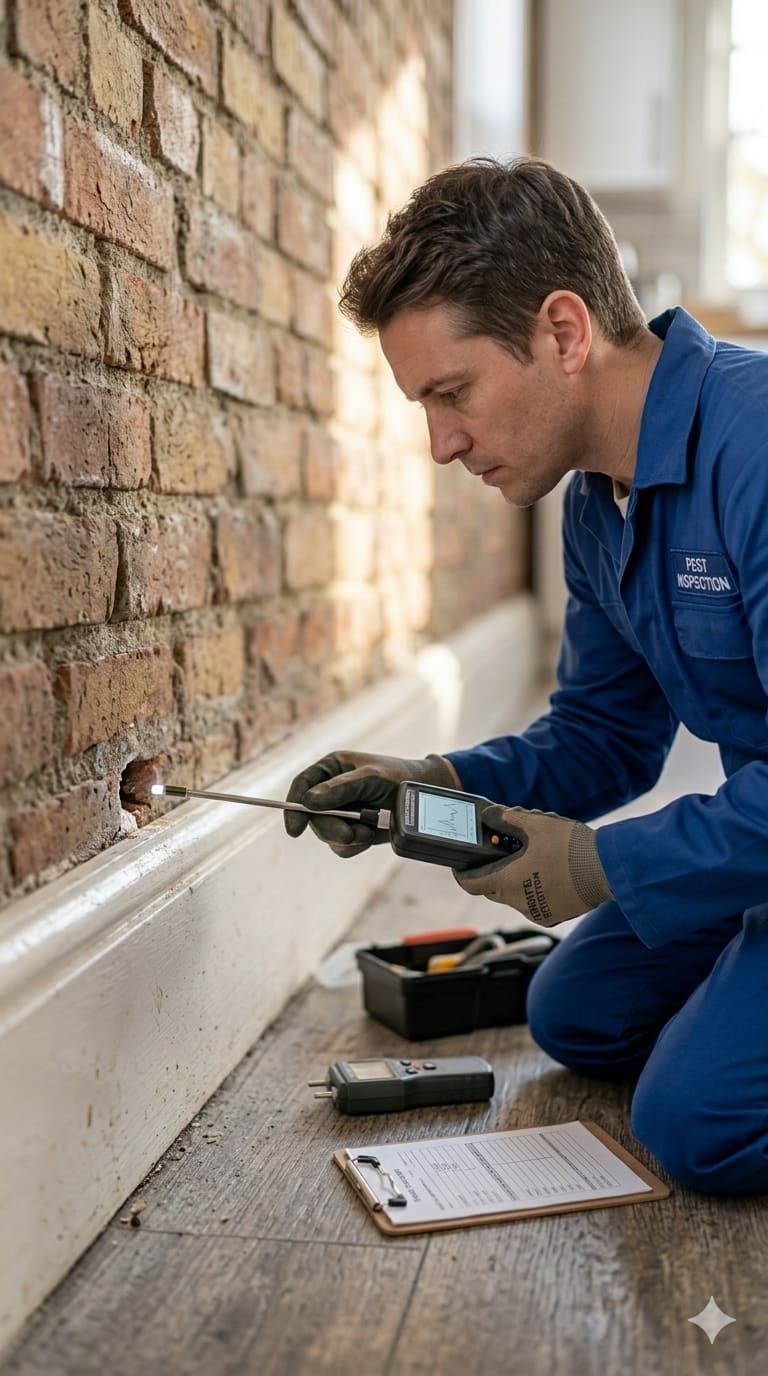
Prepare for a Melbourne termite inspection with an access checklist and questions about the report, inaccessible areas and recommended next steps.
Make the inspection useful before the technician arrives
A termite inspection is only as useful as its documented findings and limitations. When booking in Melbourne, explain the building type, whether there is a subfloor and where the roof hatch is located. Ask which parts of the property can be inspected and how inaccessible areas will be recorded.
Arrange a termite inspection before attempting to open damaged timber or cover suspected activity. Share previous reports, treatment records and renovation plans. If you have observed a particular area of concern, describe its location and provide a photograph without disturbing it.
Check access with the property contact
- Who can unlock the building, garage and side gates?
- Are roof and subfloor access points known and unobstructed?
- Are stored items blocking walls or inspection areas?
- Does a property manager need to arrange tenant access?
- Are there extensions, decks or detached structures to include?
Ask the inspector what preparation is appropriate. Do not enter confined spaces, lift roofing or remove fixed panels yourself. For a purchase or settlement deadline, confirm both the appointment and expected report delivery rather than treating them as the same event.
Read the limitations alongside the findings
Ask whether the report distinguishes observed activity, evidence of previous damage, conducive conditions and areas not inspected. An inaccessible space is not evidence that it is termite-free. Clarify whether further access, another inspection or a building specialist is recommended.
Inspection and treatment are different bookings. If activity is identified, the termite treatment service can be discussed against the findings. Read our termite warning signs guide for observations worth reporting, not a substitute for inspection.
Request a Melbourne termite inspection and include access arrangements, your deadline and existing records. Ask how recommendations and inspection limitations will be explained.