European wasps and bee swarms peak over Melbourne summers. Learn the difference, why you should never DIY a nest, and the ethical way to handle bees.
Wasps vs Bees - Why It Matters
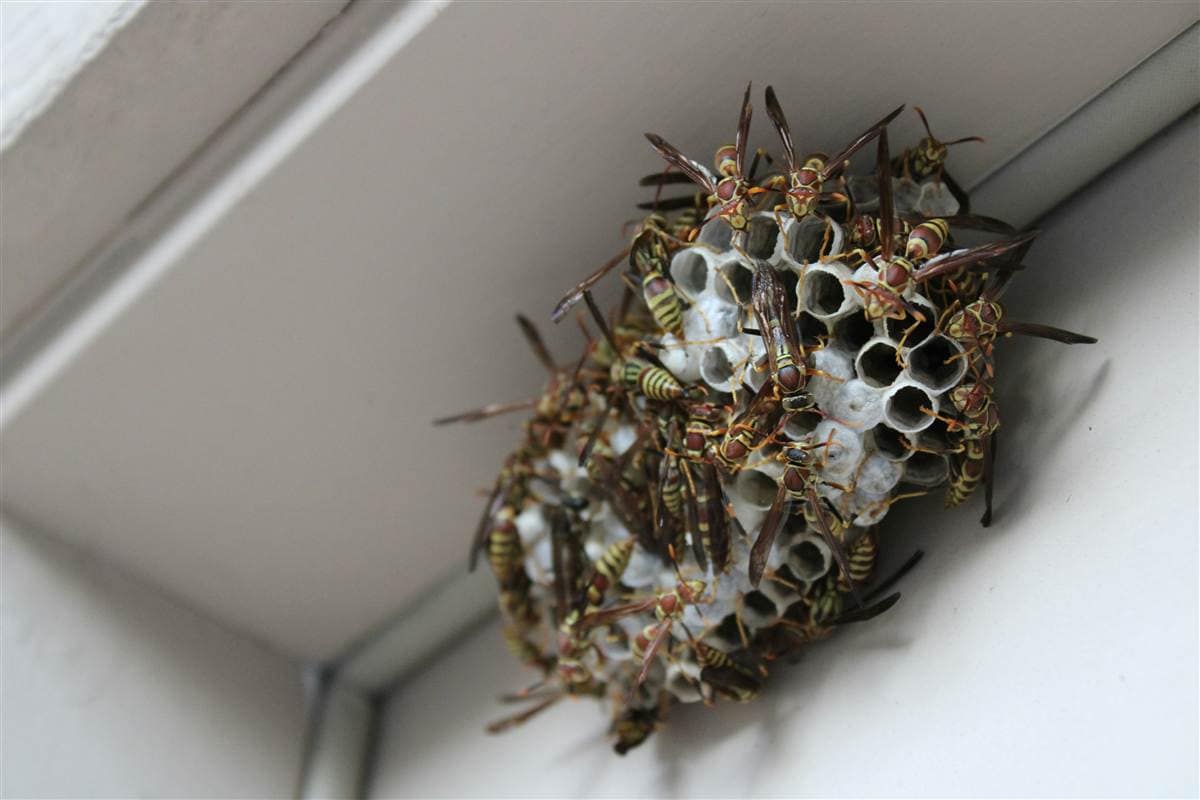
It's important to tell them apart. European wasps are aggressive, can sting repeatedly, and build large nests in wall cavities, roofs and the ground. Honey bees are vital pollinators and are protected - a swarm or hive should be relocated, not killed where possible. Getting this wrong is dangerous and, for bees, unnecessary.
When Nests Appear
Activity peaks from late spring through summer across Melbourne. A small spring nest can grow to thousands of wasps by February. Warning signs include constant insect traffic to a single point in a wall, eave, shed or garden bank.
Why You Should Never DIY a Wasp Nest
Disturbing a European wasp nest provokes mass stinging - a serious risk for anyone allergic, and for children and pets. Cavity nests also can't be fully treated with a can of spray; the colony survives inside the wall.
How We Handle It
We treat wasp nests quickly and safely, usually in a single same-day visit, including hard-to-reach cavity and ground nests. For bees, we coordinate ethical relocation through local apiarists wherever it's viable.
Stay Safe
Keep clear of the nest, don't swat near it, and cover food and drinks outdoors. For fast, safe wasp removal or bee relocation anywhere in Melbourne, call Pest Eraze on 0416 528 547.
Cost Comparison: Wasp vs Bee Removal
Wasp removal starts from around $129 while bee removal and relocation starts from around $129 reflecting the extra time needed to safely relocate a hive rather than eliminate a nest outright. Both services should be booked as soon as a nest or hive is noticed, since colonies of both insects grow larger the longer they are left.
The Key Safety Difference
European wasps are aggressive and can sting repeatedly without provoking each individual attack, making a nest near a doorway or entertaining area a genuine safety risk that should never be handled with a DIY spray on a cavity nest. Bees, by contrast, are generally docile unless directly threatened, which is why relocation rather than elimination is both the safer and more responsible approach for a bee swarm or hive.
European Wasp Nests in Wall Cavities
The most dangerous wasp jobs in Melbourne are cavity nests - colonies built inside wall voids, roof spaces, and retaining walls. The warning sign is a steady stream of wasps entering and exiting a single hole or gap. Never block the entry: trapped wasps chew through interior plasterboard and emerge inside the house, sometimes in the hundreds. Cavity nests also cannot be killed with a can of spray from the outside; the colony simply retreats deeper. Professional treatment injects insecticidal dust directly into the void, killing the whole colony including the queen.
If You're Stung
- Wash the site and apply a cold pack; a European wasp can sting repeatedly, so move away from the area first
- For stings in the mouth or throat, or any difficulty breathing, swelling of the face, or dizziness - call 000 immediately
- Anyone with a known allergy should carry their EpiPen during wasp season and use it at the first sign of a systemic reaction
- Multiple stings (disturbing a nest) warrant medical attention even without allergy
Why Wasps Return to the Same Spot
If a nest is knocked down but the queen or nest remnants survive, wasps rebuild - often within metres of the original site. Sites that hosted a nest also remain attractive: sheltered, warm, with proven access. After removal, we treat the surrounding surfaces so returning scouts do not re-establish, and we recommend sealing the cavity gaps that made the site attractive. That combination is why professional wasp removal comes with a warranty and DIY knockdowns rarely stick.