Create a useful pest activity log with locations, timings and safe photographs so a Melbourne technician can understand your enquiry before visiting.
Need help with this pest problem? Request a free onsite quote from Pest Eraze or call 0416 528 547. Tell us your suburb and the signs you have noticed.
A clear description helps you make a useful enquiry
“Something is in the roof” or “we keep seeing insects” is enough to start a conversation, but a few additional details help a pest technician understand the situation. A simple activity log records what you have actually observed without turning a guess into a diagnosis.
You do not need specialist equipment, a collected specimen or a confirmed species name. Keep notes in your phone and describe what is visible from a safe, ordinary position. Do not delay seeking help just to complete a log.
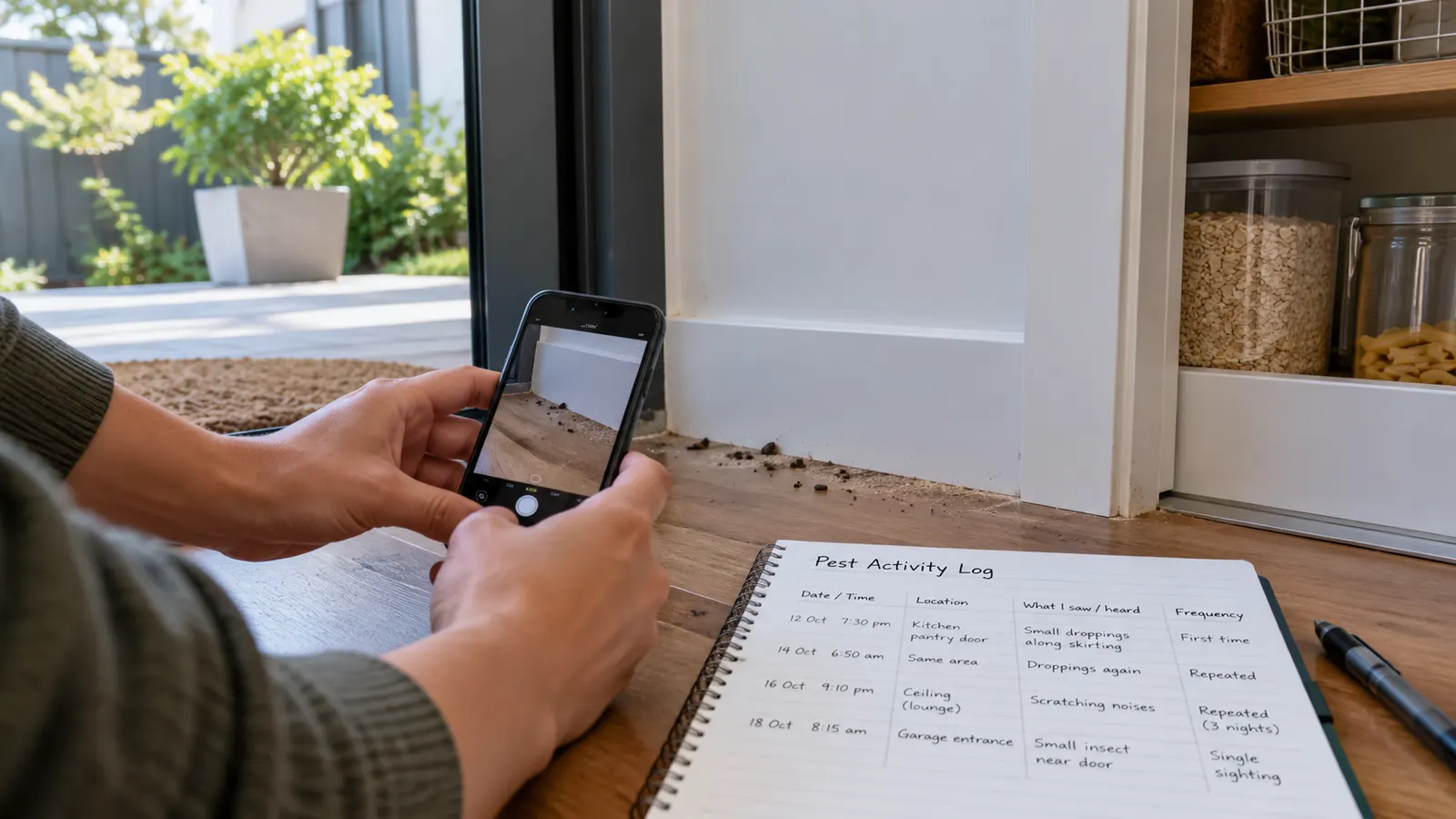
Record four details for each observation
- Location: name the room or outdoor area and the nearby feature, such as the pantry door or garage entrance.
- Time: record the date and approximate time, especially if activity seems to follow a pattern.
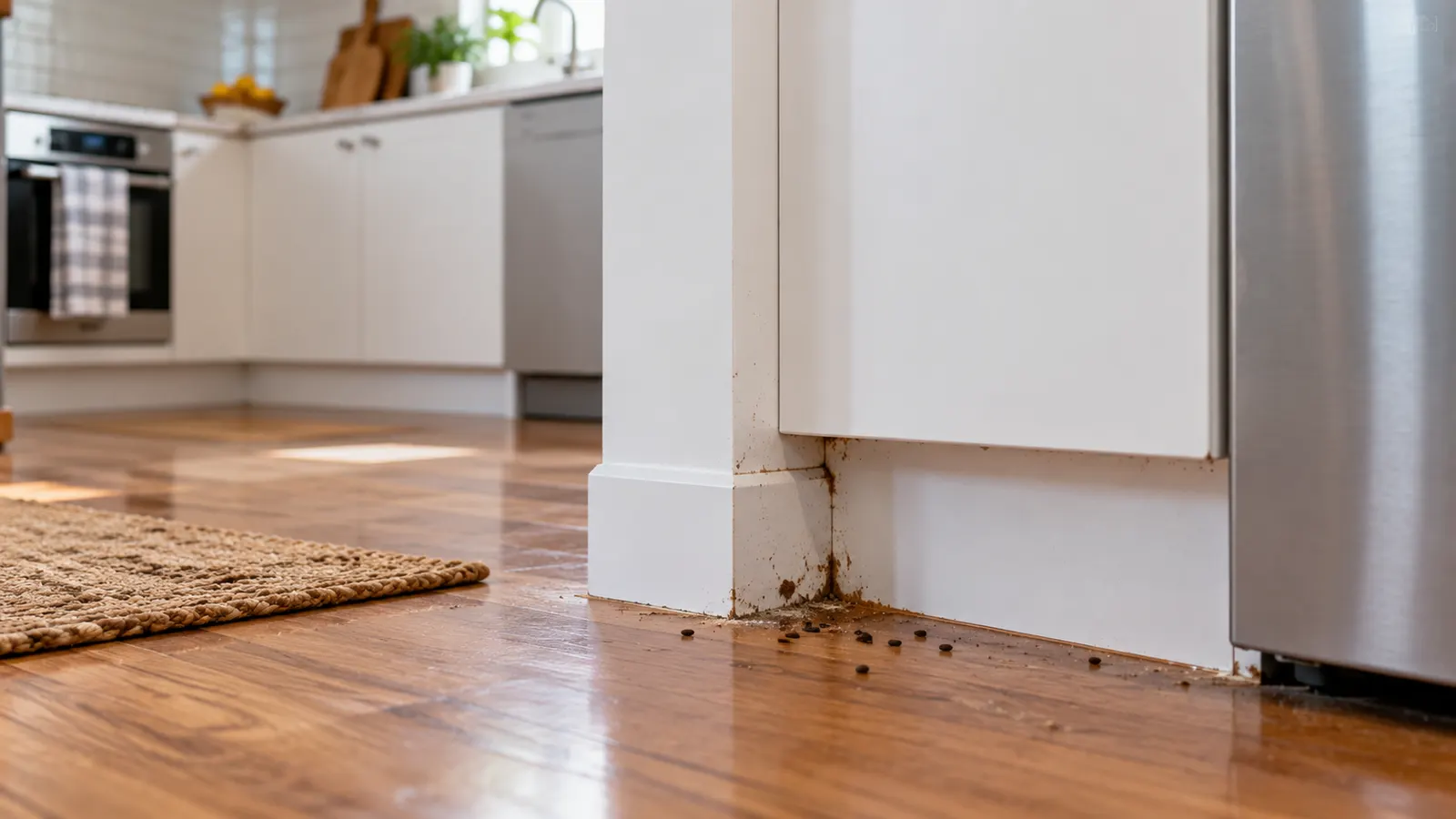
- Evidence: describe an insect sighting, a sound, a mark or damaged material without assigning a species you cannot confirm.
- Frequency: distinguish a single observation from repeated activity over several days.
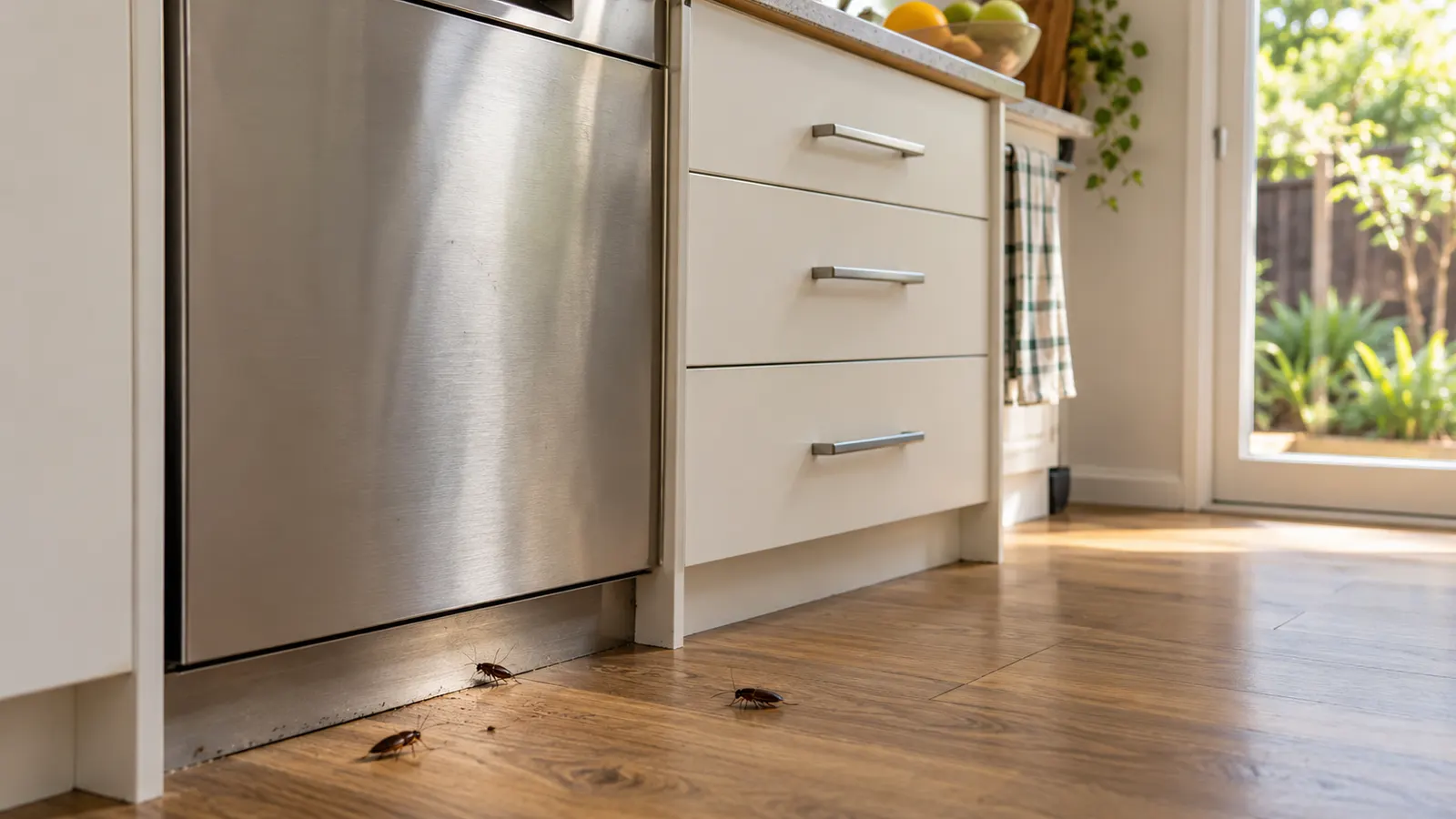
For example: “Tuesday, about 9 pm: two small brown insects seen beside the dishwasher; another sighting in the same place on Thursday.” That gives a clearer starting point than saying the entire house is infested.
Take photographs only when safe
A photograph can support your description, but it may not provide enough information for identification or a final treatment quote. If safe, take one image showing the location and another showing the visible detail. Use your phone’s zoom rather than moving closer to an animal or nest.
Do not handle unknown pests or droppings, disturb a nest, enter a roof space or move heavy appliances to obtain evidence. Tell the operator about inaccessible areas instead. For uncertain roof activity, our inspection and treatment guide explains how to clarify the next step.
Include previous attempts and property details
Note any sprays, traps or baits already used, including their names if available. Record where they were placed and when. Do not add more products simply to see what happens; Victorian household guidance advises against mixing pesticides and stresses following label directions.
Include your suburb, property type and the areas affected in your enquiry. Mention shared access, locked gates or a property manager who needs to coordinate entry. These practical details help define the booking without requiring a lengthy description of your entire home.
Turn the log into a short booking message
Use this format: “I’m in [suburb] in a [property type]. Since [date], I’ve noticed [evidence] in [location], usually at [time]. I have already tried [product or action]. The affected area is [accessible or restricted]. Please advise on assessment and treatment options.”
For insect activity in kitchens, see our cockroach control service. For a broader enquiry, browse all pest control services or request a quote. Keep your notes so you can describe changes accurately if a follow-up is needed.
Further guidance
Better Health Channel: pest control in the home explains general pesticide precautions. Recording observations is not a substitute for professional identification.